How to grow your resilience
- Manage stress: recognize sources of stress and effective practices that reduce its effects
- Care for your health: prioritize nutrition, sleep, exercise, and healthy habits
- Build connections: build a community of strong, supportive relationships
- Live with balance: learn to balance rest, recreation and responsibilities
- Stay engaged: be open to new opportunities and experiences
*Adapted from Gail M. Wagnild, The Resilience CenterTM
Cold Plunge, Dopamine, and the Mental Health Connection
As part of her self-care routine, Mal focused on feeling well, not just performing well. This meant breathwork and movement she enjoys. She was drawn to cold therapy for the way it supported her body and mind.

“I added cold therapy to my daily routine for the mental health benefits, along with my body feeling better during workouts, and training and keeping my recovery on point.”
Cold therapy gave Mal a controlled and repeatable way to exercise her resilience. And there’s a physiological reason that experience can feel so powerful. When your body is exposed to cold, your nervous system becomes more alert, and your brain releases chemicals linked to focus and mood.
Research finds that cold-water immersion increased norepinephrine and dopamine, two neurotransmitters associated with alertness and the body’s stress response, suggesting why cold exposure feels so mentally clarifying. Another study seems to point in a similar direction, suggesting that short-term cold-water immersion may improve mood and emotional processing, as well as short-term stress reduction.
Infrared Sauna vs. Traditional Sauna for Mental State
Mal keeps her self-care routine as consistent as possible, no matter where she’s at. “I had to make this leap to better my own personal well-being,” she says.
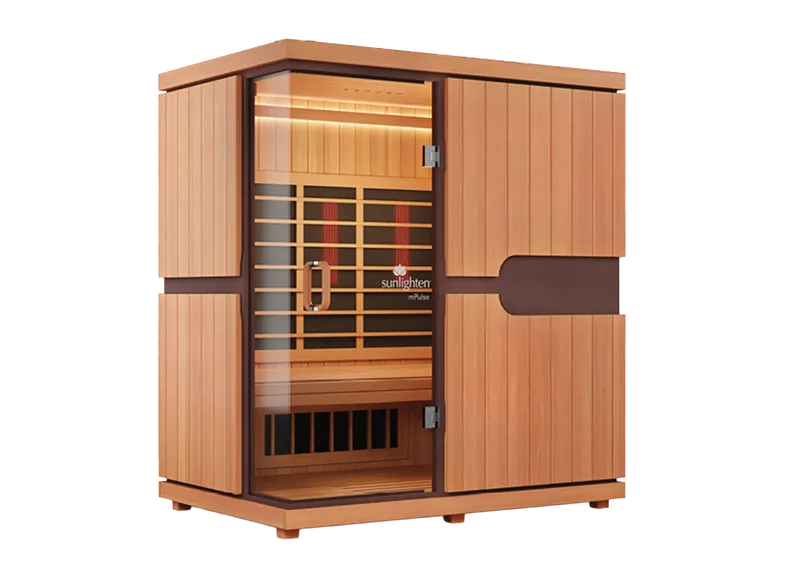
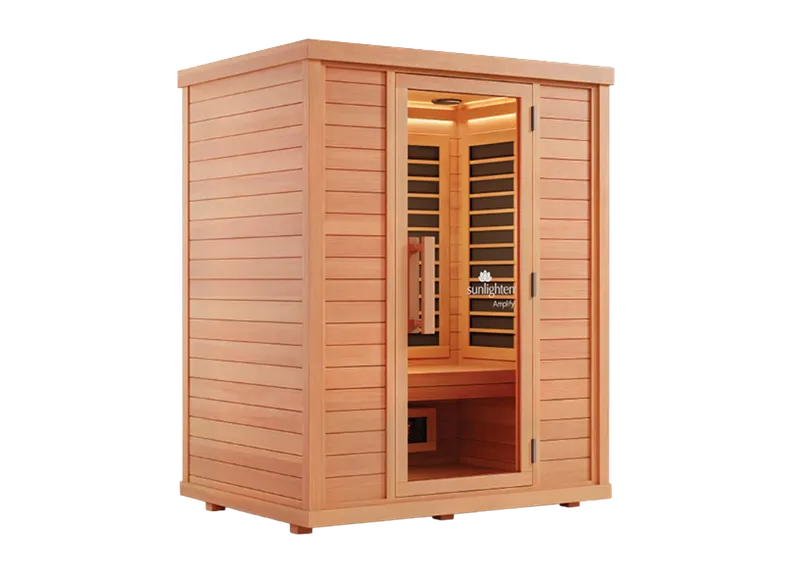
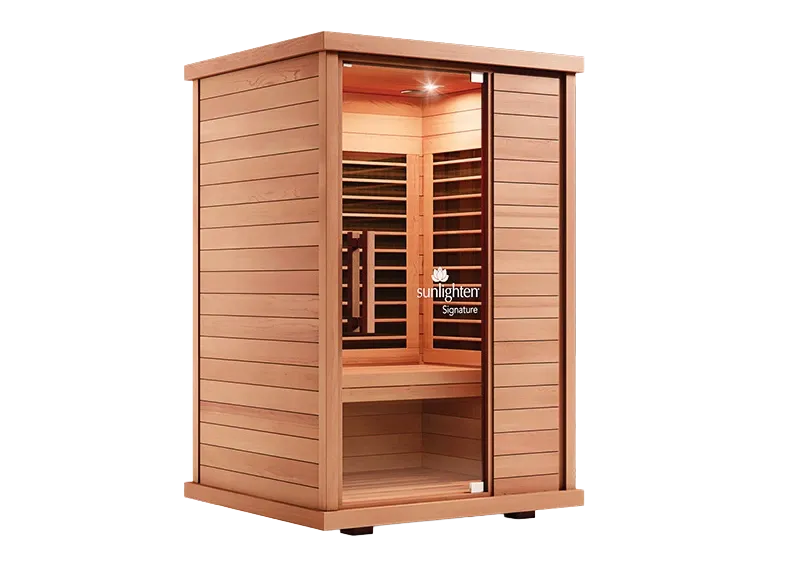
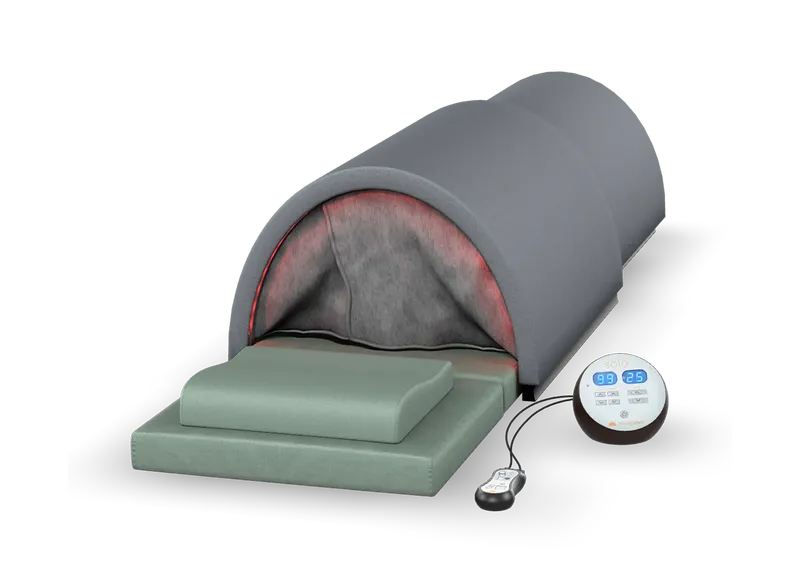
For a whole-body wellness routine to work, it should be repeatable. This is where infrared sauna use can be especially helpful. Unlike traditional saunas, which heat the air around you, infrared saunas warm the body more directly. The experience happens at lower ambient temperatures than many traditional saunas, and this can be more sustainable for people who find high-heat environments overwhelming.
Consistency is a major part of mental resilience. The goal is not to force the most intense session possible. The goal is to build a practice where your nervous system can recognize, repeat, and respond. Mal understands that cold therapy can seem intimidating. She says to start slow.
“Just build the habit and know that it gets easier as you go. If you start out sitting there for 5 minutes at the coldest temperature, you won’t look forward to getting back in. Ease into it until you build a routine that works for you and know that the benefits are so worth it!”
Curious if cold therapy is for you? Read these tips for easing into an ice bath routine.
How to Use Contrast Therapy as a Mental Health Tool
How to Use Contrast Therapy as a Mental Health Tool
Alternating cold and hot therapy can support alertness, perceived well-being, and some aspects of recovery.
As Connie Zack, co-founder of Sunlighten, says, “Contrast therapy really conditions the body and teaches both your body and mind how to adapt.” That’s part of what makes the practice so useful for resilience. You are training your body to experience stress, adapt, and return to calm.
Sunlighten’s SoloCarbon® heaters deliver infrared heat that warms the body directly, helping raise core body temperature by up to 3 degrees. That clinically shown rise in core temperature helps stimulate a deep, detoxifying sweat, and creates a steady heat phase that supports the body’s natural shift toward a more relaxed parasympathetic state. From there, the cold plunge becomes more than a shock to the system. It becomes a focused transition. Your breath changes. Your attention sharpens. Your mind has to stay in the moment.
In this way, a morning session may help support alertness, mood, and focus for the day. The increase in plasma noradrenaline and dopamine may help explain why many people report feeling mentally clear after a plunge. At the end of the day or after an intense workout, contrast therapy may serve a different purpose: helping your body shift out of high alert. The cold phase trains your breath, attention, and stress response. The heat phase encourages downshifting. The passive heating effect of the sauna session may support healthy sleep timing and nighttime wind-down.
Depending on why and how you use it, cold therapy is a great add-on to your sauna routine. Mal O’Brien agrees. “Taking an ice bath is scary, intimidating, hard, but completing an ice bath provides a sense of accomplishment that you can carry with you through the rest of your day.”
“It’s important to teach yourself that you can do hard things,” she says.
Read our full guide to contrast therapy.
To read the full interview with Mal O’Brien and learn more about Ice Barrel, click here.