What it can't do yet
Plenty gets claimed for red light that the research doesn't support. We'd rather tell you than repeat it:
- Clearing out aged cells. “Clears senescent cells” shows up constantly in red light marketing. We went looking for human evidence and came up empty.
- Vagus nerve activation. There's early preclinical work on light and nerve signaling. There is nothing resembling a controlled human trial.
- Mood. Strong trial evidence exists that whole-body heat improves depressive symptoms (Janssen et al., 2016). That's the heat doing the work. Red light's own mood evidence is still early, and we're not going to borrow the heat study's credibility to dress it up.
None of this is impossible. It just isn't proven yet, and a company willing to tell you which is which is worth trusting on the things that are.
What most people get wrong
“More is better.” There's a sweet spot. Too little light does nothing, the right amount works, and too much can cancel the benefit out entirely. Researchers call it a biphasic dose response (Huang et al., 2009). The right dose beats the biggest number on the box.
“Distance doesn't really matter.” It matters more than almost anything else. Light intensity falls off with the square of distance, which has a blunt practical consequence. Move from 6 inches away to 12, and you've cut your dose to a quarter. A panel's advertised output was measured at the bulb. You will never receive that number.
“If I don't feel heat, it isn't working.” Red light is a signal rather than a heat treatment, so feeling nothing is exactly right. If you do feel heat, that's the sauna.
“Red light and near-infrared are the same.” They're related, but they aren't interchangeable. Red is visible and works near the surface. Near-infrared is invisible and goes deeper. Most of the research that makes red light interesting used both together.
“Red light gives me everything an infrared sauna does.” It doesn't. Red light's evidence is about skin and cellular energy. Far infrared's evidence is about heat: raising core temperature, sweating, and the cardiovascular effects that come with heat stress (Imamura et al., 2001). They're complementary tools.
What this means if you're shopping
Put the last two together and you get the question almost nobody asks before buying. Not how powerful the light is. How much of it reaches you, and for how long.
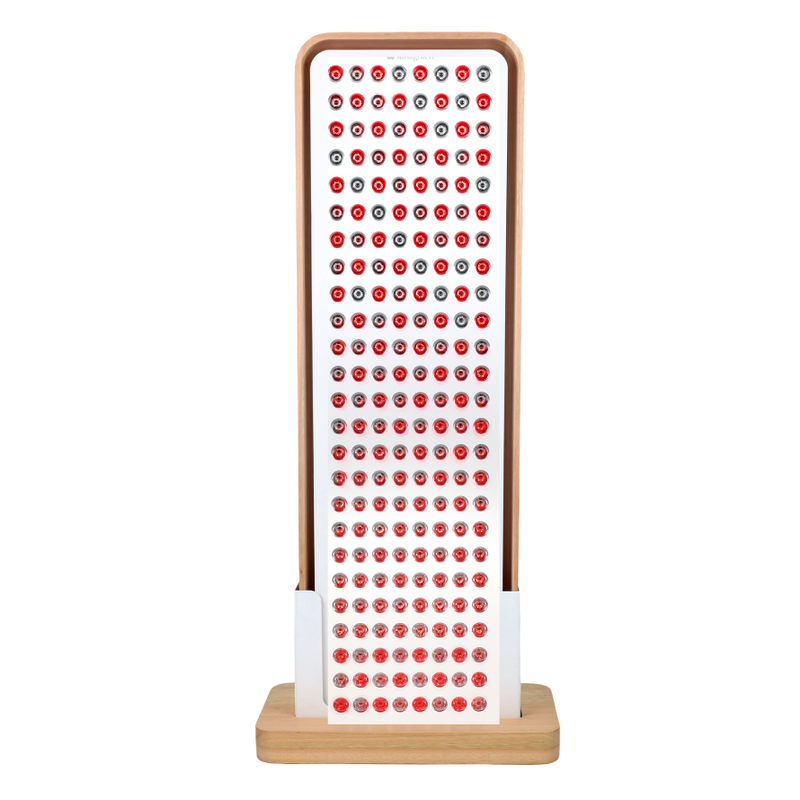
Wavelength, distance, placement, coverage and session length all decide the answer, and a single panel you sit in front of leaves every one of them up to you. Because intensity drops off so steeply, the side of you facing the panel and the side that isn't are getting very different doses out of the same session.
That's the real limitation of red light bolted onto a sauna after the fact. The light itself is fine. Nothing about the setup is deliberate.
Red light also doesn't compete with heat. Different mechanism, so it can run through a hot session without either one interfering with the other, which is the argument for engineering them together from the start instead of hanging a panel on a wall.
How we evaluated this comparison
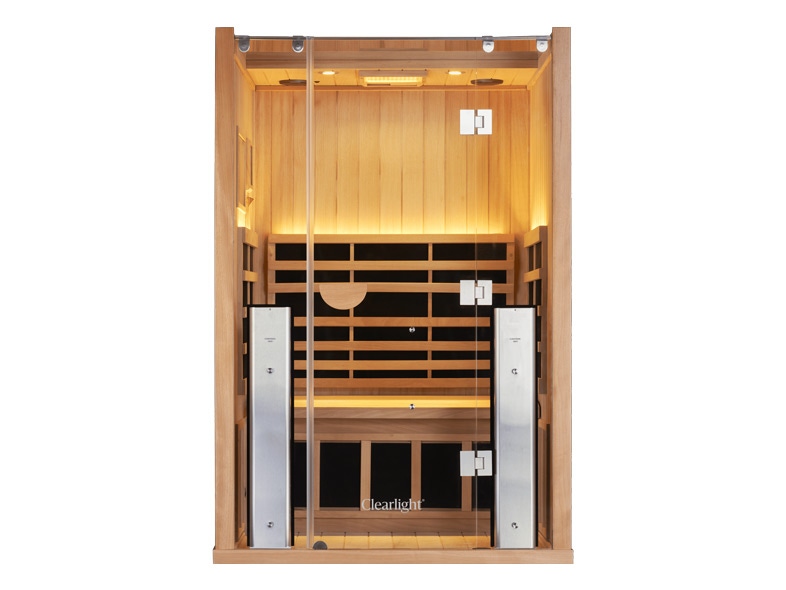
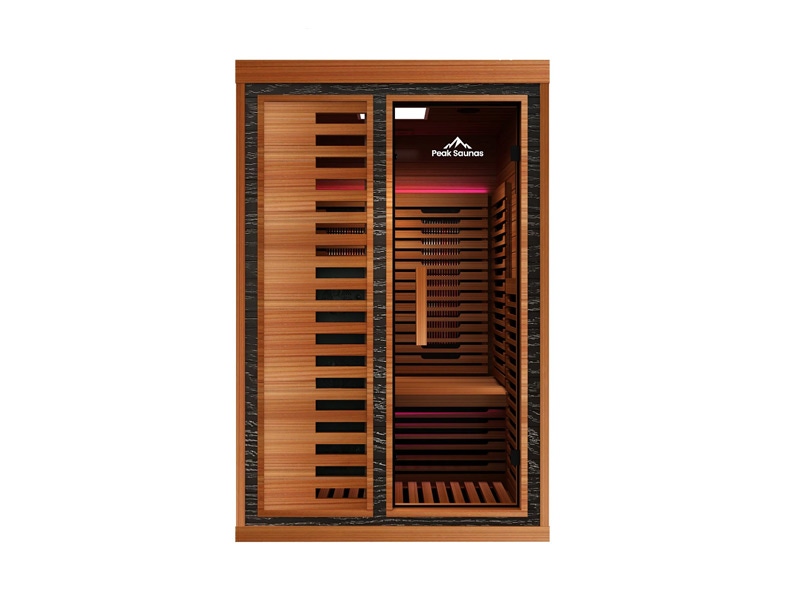
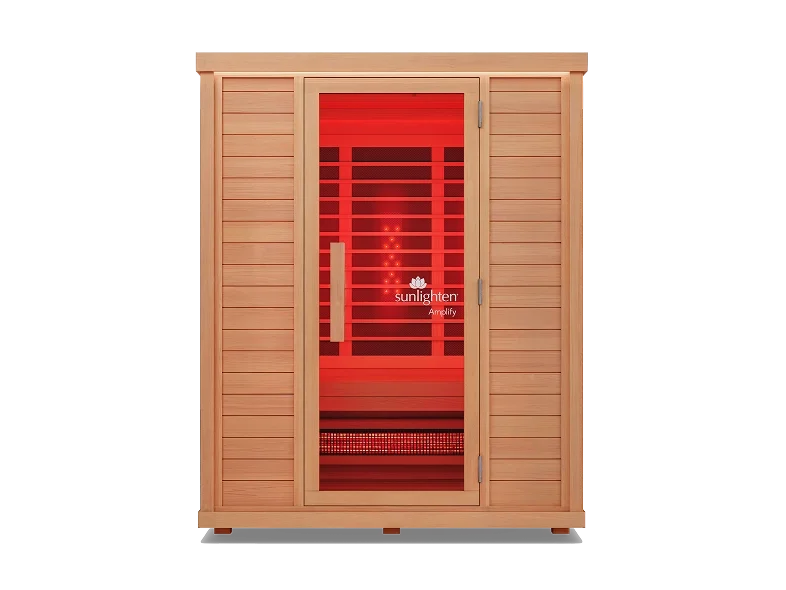
Most red light therapy is delivered through a standalone panel: one fixed position, one distance from the body. Infrared sauna brands take different approaches to that problem, and they aren't all the same. The comparison below covers five approaches to red light delivery: a generic standalone panel, Clearlight's Sanctuary 2, Peak Saunas' Fuji, the Sunlighten mPulse® and the Sunlighten Amplify RED.
Competitor figures come from Sunlighten's internal comparison research, cross-referenced against publicly published specs where available as of this writing. Sunlighten's own figures reflect internal product specifications. Pricing is excluded, since published pricing varies by model, configuration, and whether a brand publishes pricing at all.