Written by: Kate Korom
Published on: Oct. 27, 2026
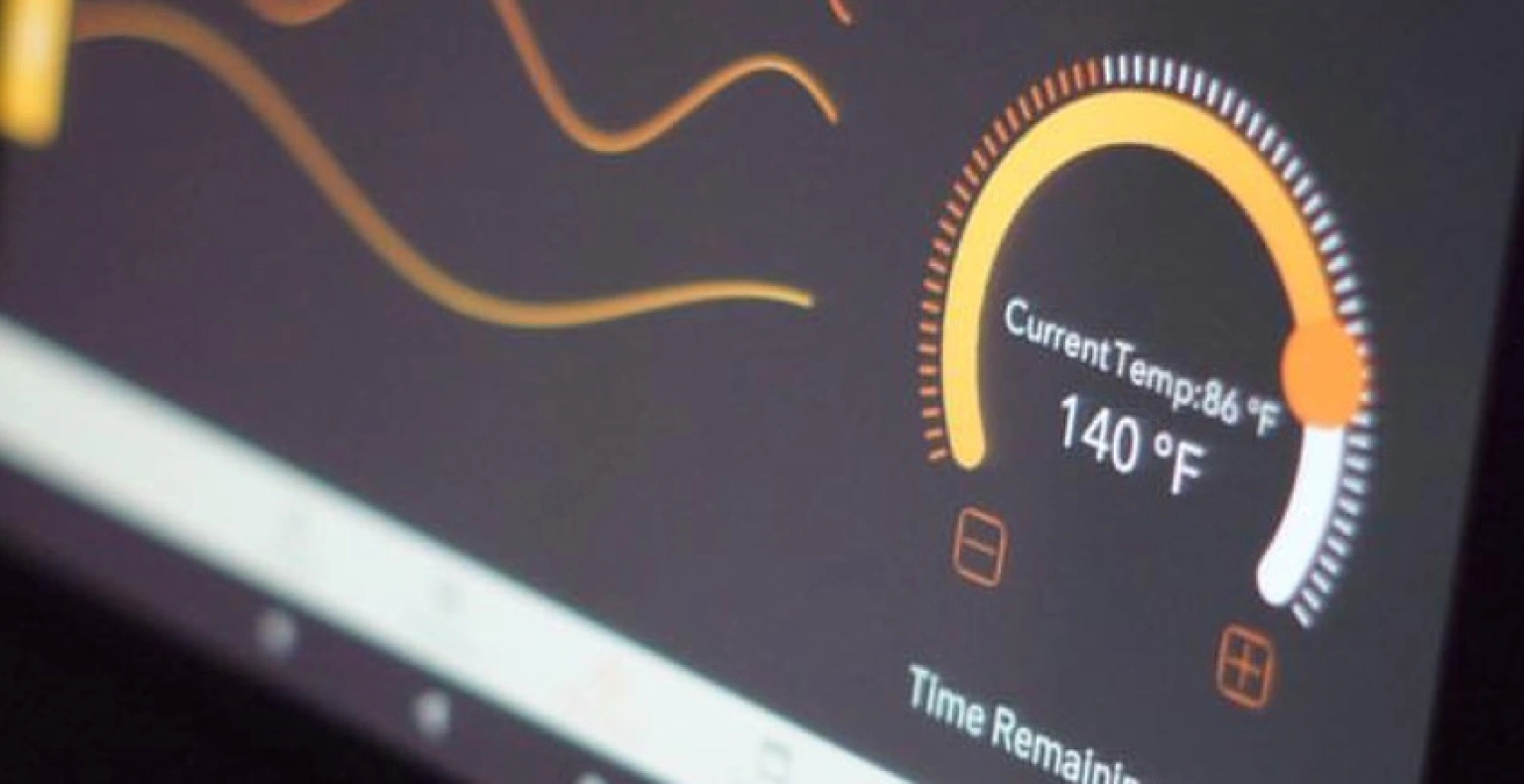
Practical ranges by goal, and why air temperature isn't the whole story
What Temperature Should an Infrared Sauna Be?
How Infrared Compares to Traditional Sauna Heat
A traditional, Finnish-style sauna heats the air in the room, and that heated air then warms the body. This process commonly requires temperatures above 170°F. Infrared saunas work differently: the energy is absorbed directly by the body's tissues, so a lower ambient temperature can still produce a comparable warming effect. Session length reflects this difference as well — infrared sessions commonly run 20–40 minutes, while the higher intensity of a traditional sauna often results in shorter sessions.
Temperature Control vs. Wavelength Control
Air temperature alone does not determine how effective a session is. Two physical principles explain why, and both come from the physics of black-body radiation. A black body is a theoretical surface that absorbs all the radiant energy that reaches it. By that same physics, it also emits the maximum possible energy for its temperature. Real heaters don't emit as perfectly as a theoretical black body; the fraction of that theoretical maximum they can reach is called “emissivity.”
The first physical principle is the Stefan-Boltzmann law, which describes how much radiant energy a heater produces: output scales with the heater's emissivity and its surface temperature raised to the fourth power. A heater with higher emissivity converts more of its energy into usable infrared rather than losing it as ambient warmth, so two saunas reporting the same air temperature can be delivering different amounts of infrared to the body.
The second is Wien's displacement law: a heater's surface temperature determines the wavelength it emits. A heater controlled only by a cabin-air thermostat cycles on, reaches its limit, shuts off, and the emitted wavelength drifts over the course of a session. Controlling the heater's surface temperature directly, rather than the surrounding air, keeps the output within a consistent wavelength range throughout the session. This is the engineering rationale Sunlighten cites for regulating heater surface temperature rather than air temperature alone.
Sunlighten's heaters have been described as independently tested in the 95–99% emissivity range; the most specific currently published figure — 0.99 — was measured by Bruker Analytical Services on March 1, 2022, for the mPulse and Amplify II models specifically.
A Practical Temperature Range by Goal
| Session Goal | Suggested Temperature |
| First session, acclimating | Start around 100°F |
| Routine relaxation or detox support | 100–130°F |
| Longer or more frequent sessions | 100–130°F |
| A more intense, faster sweat | Up to 150–170°F, high-heat models only |
Higher temperature does not necessarily correspond to greater benefit; comfort and consistency of use are more closely associated with results than maximum heat alone.
Who Might Prefer a Lower Temperature
Because infrared saunas operate at lower ambient temperatures than traditional saunas, some people find them more tolerable, including those who are sensitive to high heat. That said, anyone who is pregnant, managing a cardiovascular condition, prone to low blood pressure, acutely ill or feverish, taking medication that affects heat tolerance, or using an implanted medical device should consult a doctor before using a sauna of any kind, including infrared. See Sunlighten contraindications for more.
Who Might Prefer a Higher Temperature
Some people prefer the more intense heat traditional saunas are known for, including those already acclimated to high temperatures and anyone looking for a faster, more vigorous sweat; high-heat infrared models, which reach up to 150–170°F, are built for that preference. That said, higher temperatures are best suited to experienced users. Anyone new to sauna use is generally advised to start at a lower setting and build up gradually.
How Sunlighten and Competitors Approach Heat
Brands differ in how they define and publish temperature specifications. Some publish a single maximum-temperature figure as their primary specification; Sunlighten's approach centers on wavelength control, with air temperature treated as a resulting output of that process rather than the primary metric.
How this was evaluated: figures below come from Sunlighten's internal comparison research (Best-Infrared-Sauna-Comparison project doc), checked against publicly published competitor specifications as of this writing. The traditional sauna range reflects general industry knowledge rather than a specific cited source.
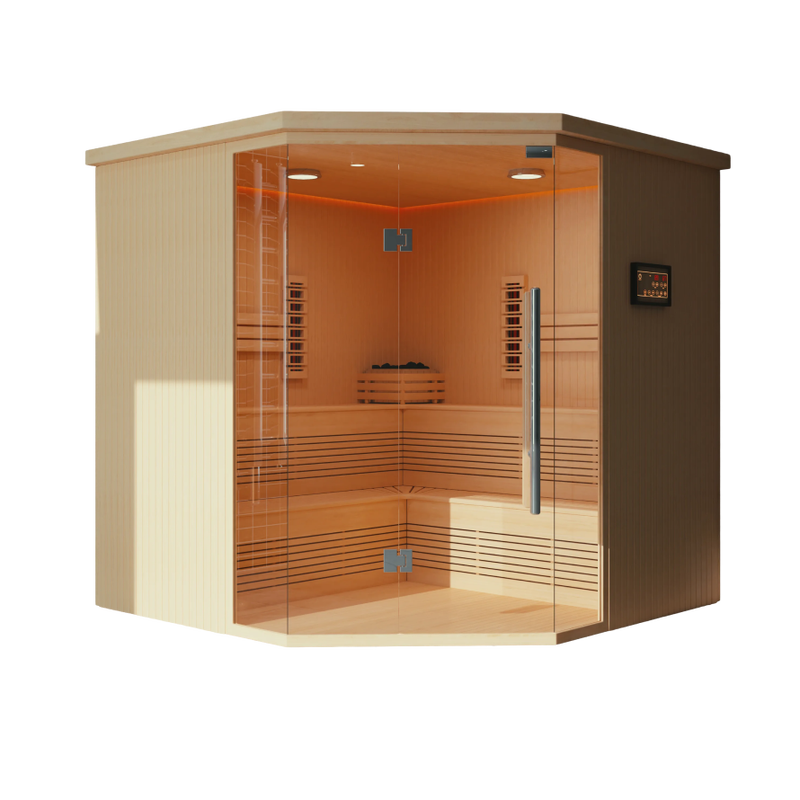
Traditional Sauna
| Typical/max temperature | ~170–195°F+ |
| What's directly controlled | Air temperature |
| Heater emissivity | N/A |
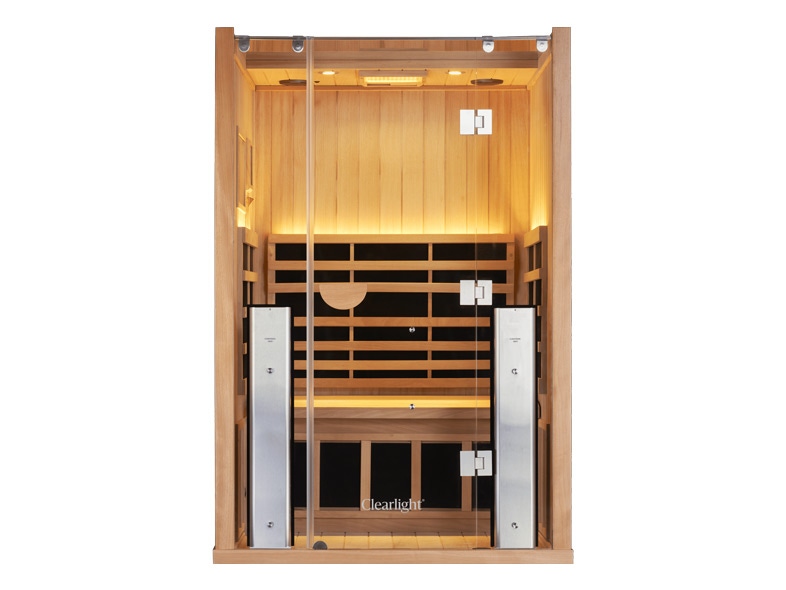
Clearlight
Sanctuary 2
| Typical/max temperature | Not published |
| What's directly controlled | Air temperature |
| Heater emissivity | Not published |
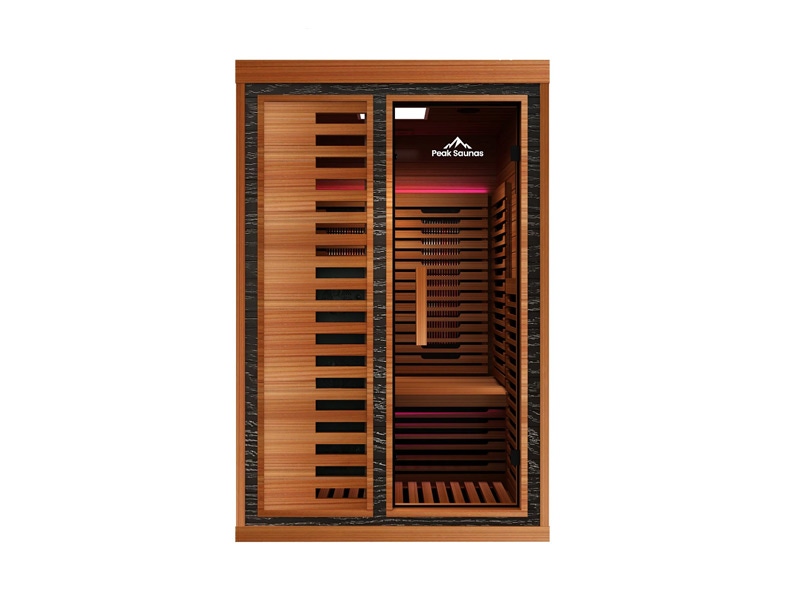
Peak Saunas Fuji
| Typical/max temperature | 150°F |
| What's directly controlled | Air temperature |
| Heater emissivity | Not published |

mPulse®
| Typical/max temperature | No published ceiling — program-controlled |
| What's directly controlled | Heater surface temperature, dosed by wavelength |
| Heater emissivity | 0.99 (Bruker Analytical Services, 3/1/2022) |

Amplify™
| Typical/max temperature | 170°F |
| What's directly controlled | Heater surface temperature, tuned for heat output |
| Heater emissivity | 0.99 (same SoloCarbon® heaters) |
The Honest Ledger
A traditional sauna provides a conventional high-heat sauna experience, which some users find uncomfortable.
Clearlight's Sanctuary 2 does not publish a maximum temperature or an emissivity figure, which means there is no way to independently assess how much of its heat output is therapeutic infrared versus ambient warmth.
Peak's Fuji publishes a specific maximum temperature — 150°F — which provides a direct point of comparison. It does not publish emissivity data, so that figure cannot be connected to a measure of usable infrared delivered.
Sunlighten's mPulse Intelligent Sauna does not publish a single maximum-temperature figure, since its heat output follows wavelength programming rather than a fixed ceiling. Its 0.99 emissivity rating (tested by Bruker Analytical Services, 3/1/2022) is the figure most directly tied to how efficiently it converts energy into usable infrared.
Sunlighten's Amplify saunas are built for users who want higher-heat, faster sessions, reaching up to 170°F while maintaining the same 0.99 emissivity rating as mPulse.
What We Still Don't Know
Neither Clearlight nor Peak publishes an emissivity figure, so their advertised heat output cannot be independently verified as therapeutic infrared versus ambient warmth. The Stefan-Boltzmann example commonly used to illustrate heater output is drawn from internal engineering documentation dated 2008 and uses an illustrative 0.95 emissivity figure; current SoloCarbon heaters test at 0.99 (Bruker, 2022), so the underlying physics holds but that specific example predates current hardware. The 95–99% emissivity range cited for Sunlighten's broader heater lineup does not carry a named testing lab or date in the source material reviewed; only the 0.99 figure for mPulse and Amplify is tied to a specific lab and date.
The claim that infrared sauna use raises core body temperature by three degrees comes from Sunlighten's own published research; independent third-party verification of that specific study has not been confirmed, so it is labeled as Sunlighten-sourced research pending that confirmation.
Frequently Asked Questions
What temperature should an infrared sauna be set to?
Does a hotter infrared sauna work better?
Why does temperature control differ between sauna wavelength and air temperature?
Are infrared saunas more tolerable for people who are heat-sensitive?
What is the highest temperature an infrared sauna reaches?